
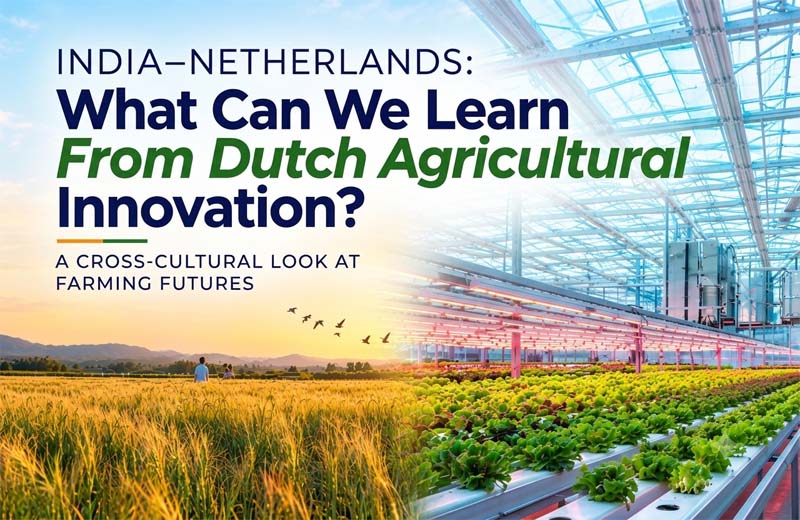
The world’s food systems are under a lot of stress because of climate change, less land to grow food, and a growing population that will reach 9.7 billion by 2050. To deal with these problems, countries are looking for new ways to farm.
The partnership between India and the Netherlands is a great example of how to improve food production. By combining high-tech farming with local
methods, the Dutch are helping to change India’s huge agricultural sector.
According to the Government of India’s Third Advance Estimates for 2023–24, total horticultural production is 353.19 million tonnes. Of this, fruits account for 112.73 million tonnes and vegetables for 205.80 million tonnes, while the remainder comes from other horticultural crops such as honey, flowers, plantation crops, spices, and aromatic and medicinal plants. The focus is shifting from just growing a lot to growing valuable and sustainable crops.
Source: Press Information Bureau (PIB), Government of India – Third Advance Estimates of 2023-24 of
Area and Production of Horticultural Crops:
https://www.pib.gov.in/Pressreleaseshare.aspx?PRID=2057249&lang=2®=48
This partnership is not just about trade, but about sharing knowledge, using new technology, and finding ways to grow more food without hurting the environment, so we can feed people in the future.
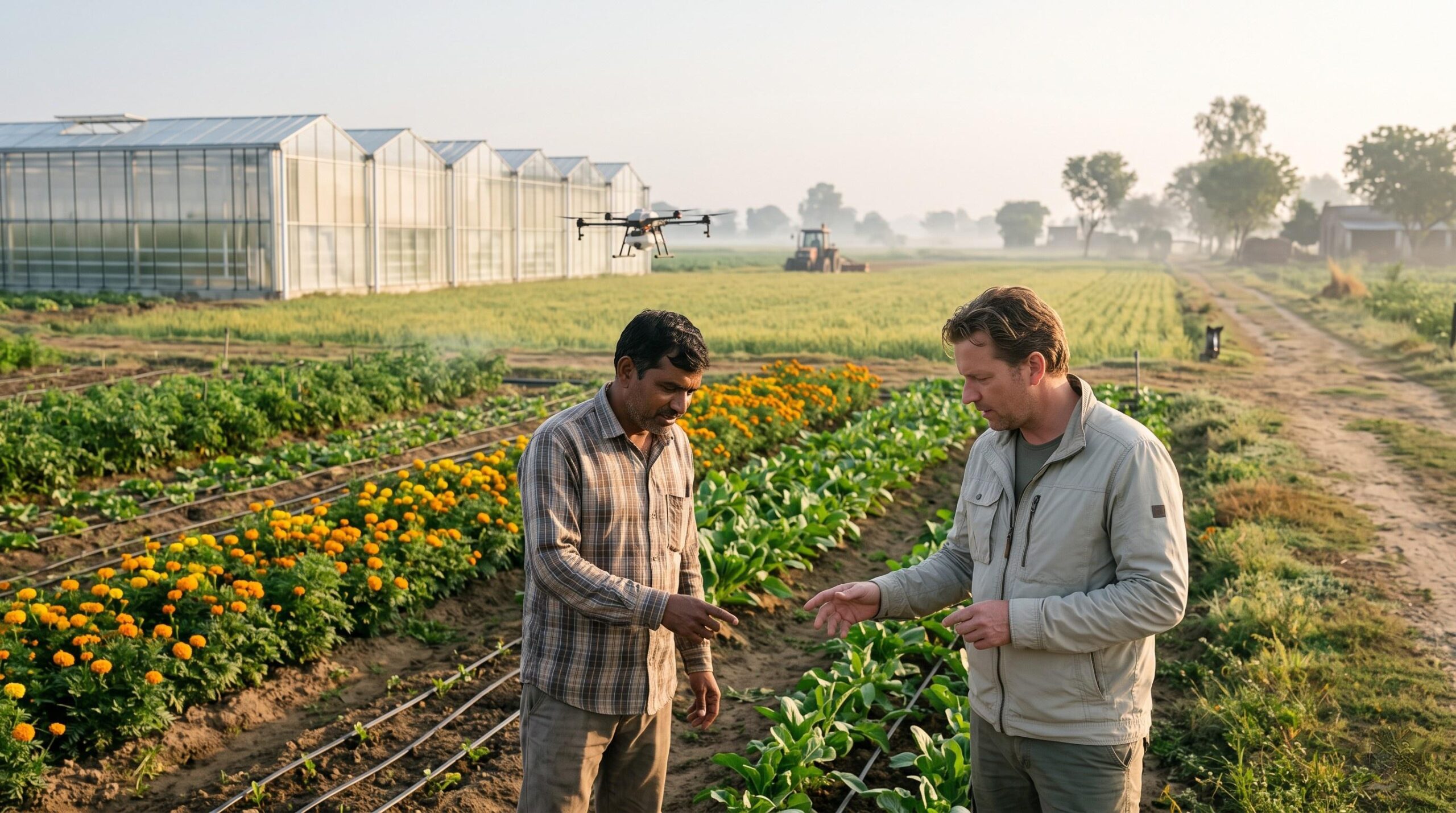
The story of how the Netherlands and India work together on farming goes back a long way. It started with simple talks between the two countries and grew into a strong partnership.
Formal agricultural cooperation between the two countries dates back to a Memorandum of Understanding signed in June 1984 between India’s Ministry of Agriculture and the Netherlands Ministry of Agriculture and Fisheries.
Source: Indian Council of Agricultural Research (ICAR), Bilateral MoUs:
https://icar.gov.in/en/bilateral-mous
Over the following decades, cooperation expanded beyond research and knowledge exchange to include horticulture, dairy, and water management.
The way they worked together changed from just importing equipment to building skills and knowledge.
By the 2010s, they started working together on joint projects and creating special areas for knowledge sharing. The Netherlands Embassy in New Delhi played a big role in making this happen, helping to shift the focus from government-led projects to ones led by private companies. This laid the groundwork for the advanced technology sharing we see today. The partnership has come a long way, and it’s interesting to see how it has evolved over the years.
From simple beginnings to complex collaborations, the Netherlands and India have created a strong foundation for working together on farming and technology.
Despite its small size, the Netherlands is the world’s second-largest exporter of agricultural products, with food exports worth more than €120 billion a year. India is turning to Dutch expertise to improve farm productivity.
Dutch-style farming methods are now being adopted in states such as
Maharashtra, Haryana, Karnataka and Tamil Nadu to raise output and reduce
waste. The Netherlands covers only a small fraction of India’s area, yet it has
built one of the most productive farm sectors in the world.
By copying the Dutch methods, India hopes to increase its own farm production
and cut down on losses after harvest time.
3
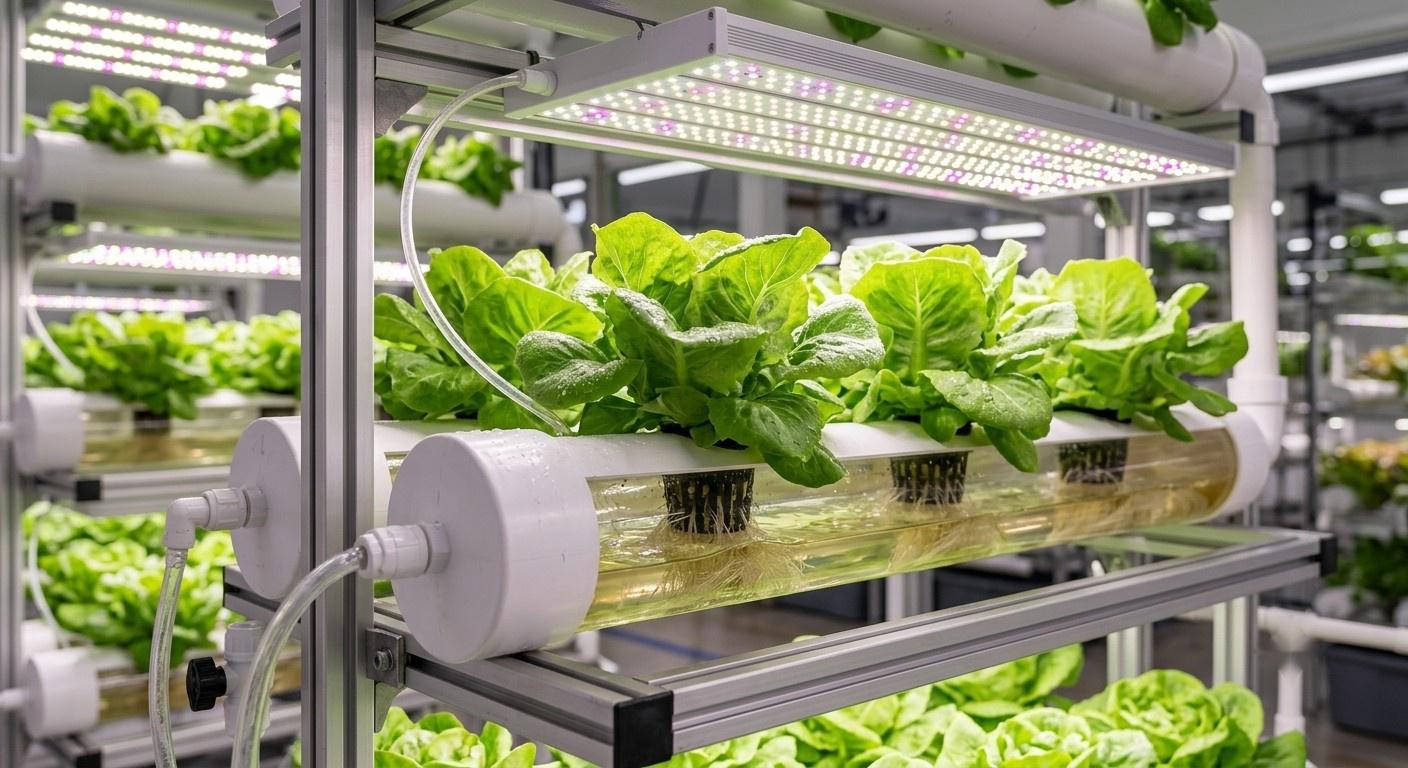
Several advanced farming techniques inspired by Dutch practice are now in
use across the country. These include greenhouses and hydroponic systems
that conserve water. Research on hydroponic lettuce, for example, found water
use of up to roughly 90% less than conventional field cultivation, along with
considerably higher yields per unit area (Barbosa et al., 2015).
Source: Barbosa et al. (2015), Comparison of Land, Water, and Energy Requirements of Lettuce Grown
Using Hydroponic vs. Conventional Agricultural Methods, International Journal of Environmental
Research and Public Health: https://pmc.ncbi.nlm.nih.gov/articles/PMC4483736
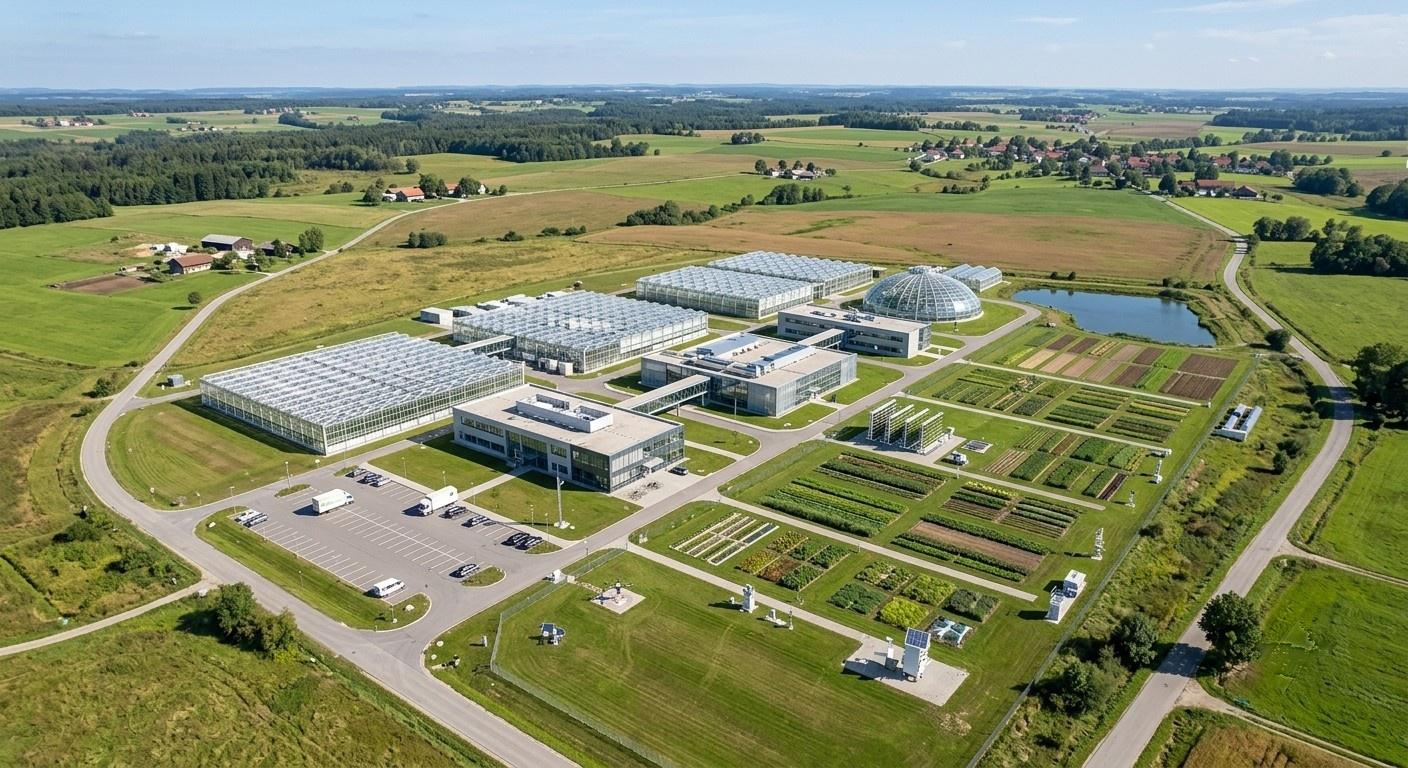
The Indo-Dutch Knowledge Park in Haryana serves as a testing ground for new
seed varieties and greenhouse technologies, helping assess which solutions
work best under Indian conditions.
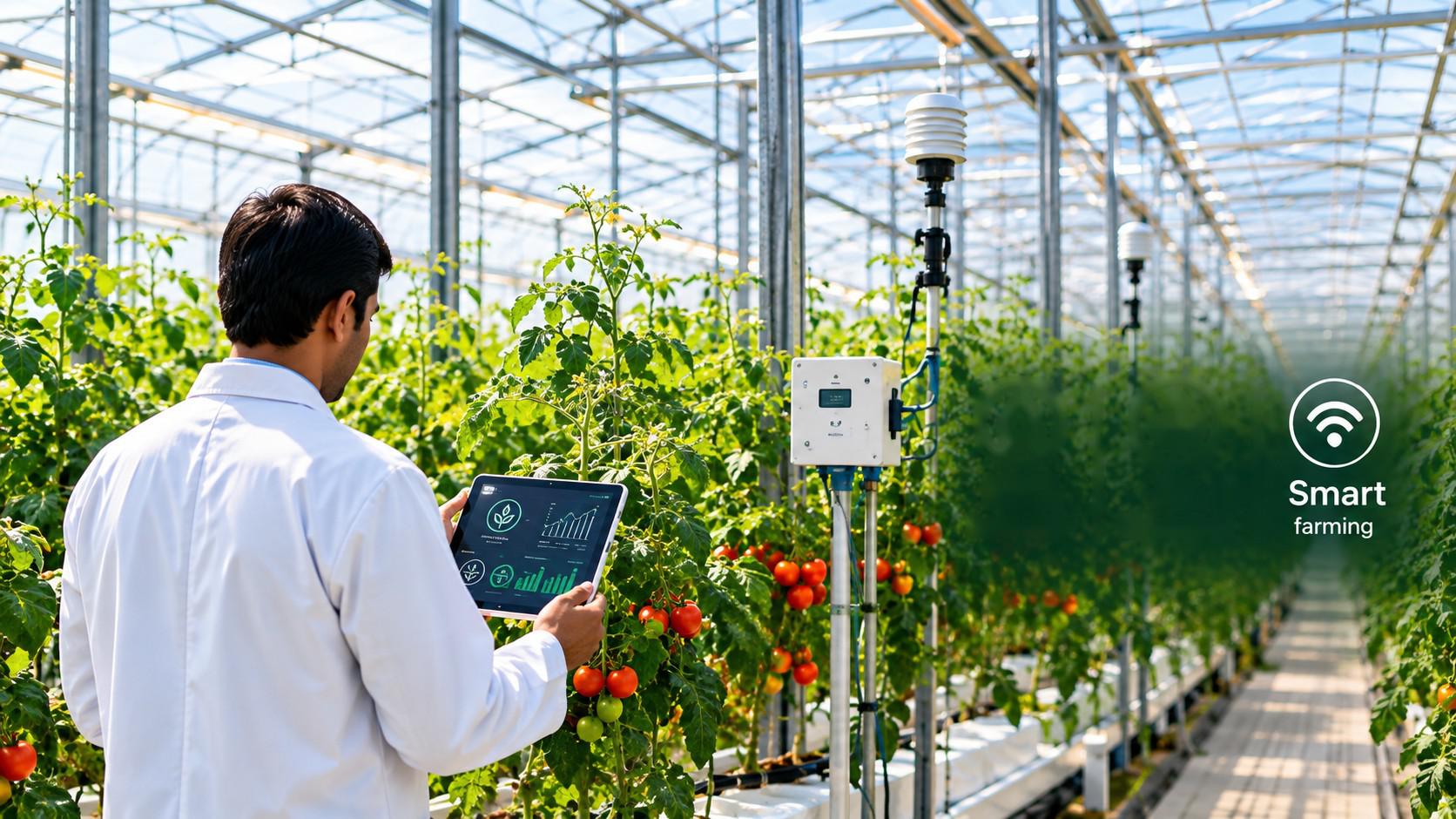
Recently, India and the Netherlands made some agreements to work together
on digital farming, which means they’ll be using special sensors and computers
to keep an eye on the soil and weather in real time.
This matters because India’s agritech sector has a lot of room to grow. An
EY–FICCI report put the sector’s market potential at around US$24 billion by
2025, and more recent projections suggest the market could cross US$28
billion by 2030. Precision agriculture and farm management, including
sensor-based monitoring of soil and weather, form part of this opportunity.
Sources: EY–FICCI estimate as reported by Entrepreneur India: https://india.entrepreneur.com/news-an
d-trends/innovation-meets-tradition-to-shape-indias-agricultural/474884 | Inc42, Indian Agritech Market
Landscape Report 2025: https://inc42.com/reports/indian-agritech-market-landscape-report-2025
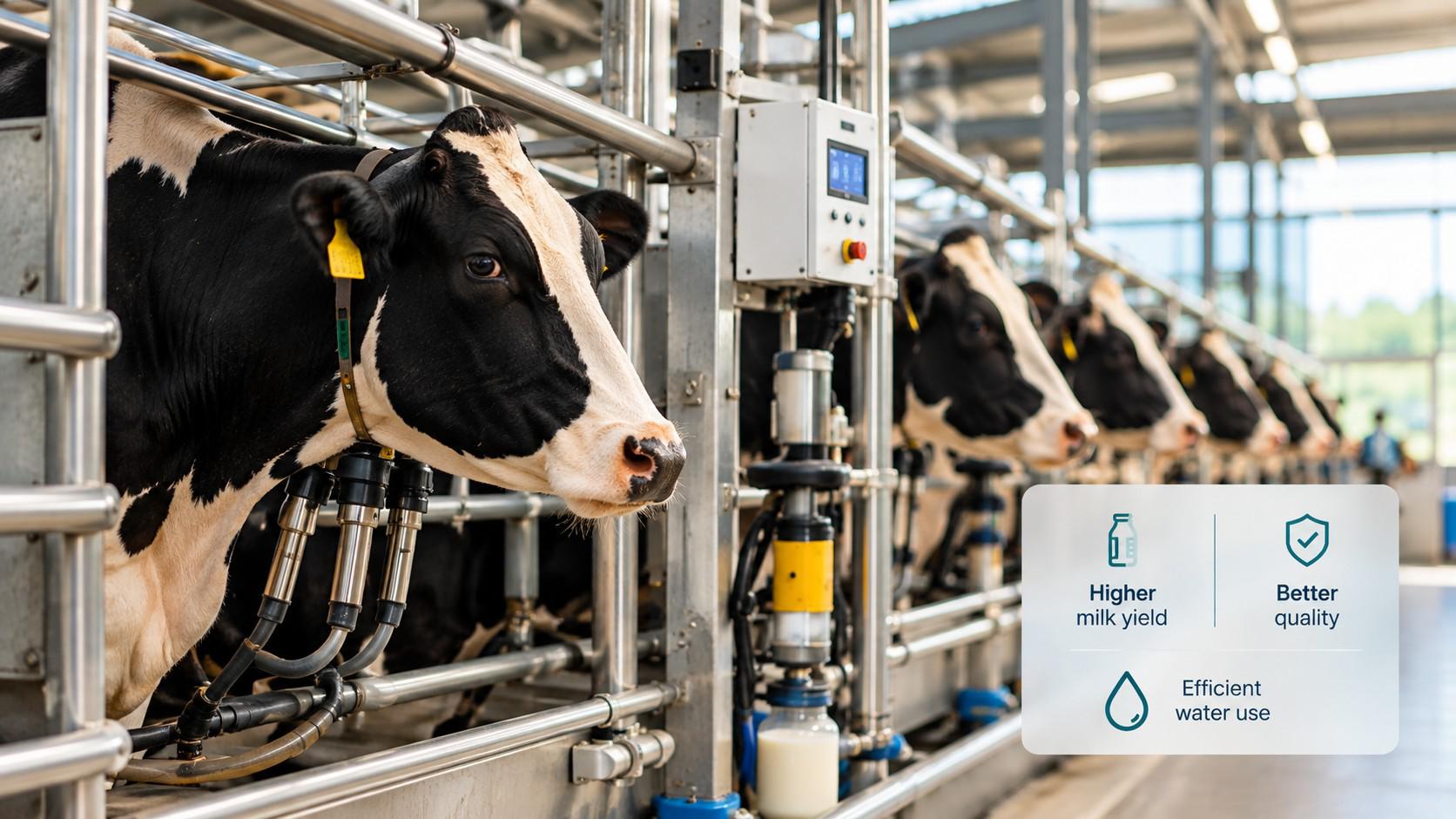
The partnership extends beyond crop cultivation to dairy farming and water
management. The Netherlands is a global leader in dairy technology, and a
number of Indian dairy cooperatives have begun using automated milking
systems, herd-management software and precision feeding systems.
Plus, the Dutch have developed some really efficient ways to water crops, like
drip irrigation and fertigation, which are now being used for things like
pomegranates and grapes in areas where water is scarce. This means every
drop of water counts, and it’s making a real difference in water-stressed
regions.
Adopting high-tech farming in a developing economy presents distinct hurdles,
yet each obstacle offers a clear pathway for structural improvement and
innovation.
The biggest challenge is cost. Setting up a modern greenhouse with automated
climate control is expensive, and a fully automated Dutch-style facility can cost
between ₹5,000 and ₹8,000 per square meter, which puts it beyond the reach
of many small farmers.
To solve this, banks and state governments are changing the way they give
subsidies. The central government wants to create 10,000 new groups where
farmers can work together, called Farmer Producer Organizations (FPOs),
which will help small farmers share resources and make it possible for them to
afford high-tech equipment.
This way, they can take advantage of economies of scale and make their farms
more efficient.
India and the Netherlands have markedly different climates. The Netherlands
has a mild, maritime climate, whereas much of India experiences high
temperatures, humidity, and intense monsoon seasons.
If you try to build greenhouses in India just like they do in Europe, it’s going to
cost a lot to keep them cool. So, what works better is to come up with our own
solutions that fit India’s climate.
Some startups are now making cheap, well-ventilated greenhouses that use
natural air and special nets to block out some of the sun. They’re also adding
solar panels to save energy and using special cooling systems that are just
right for hot places like India.
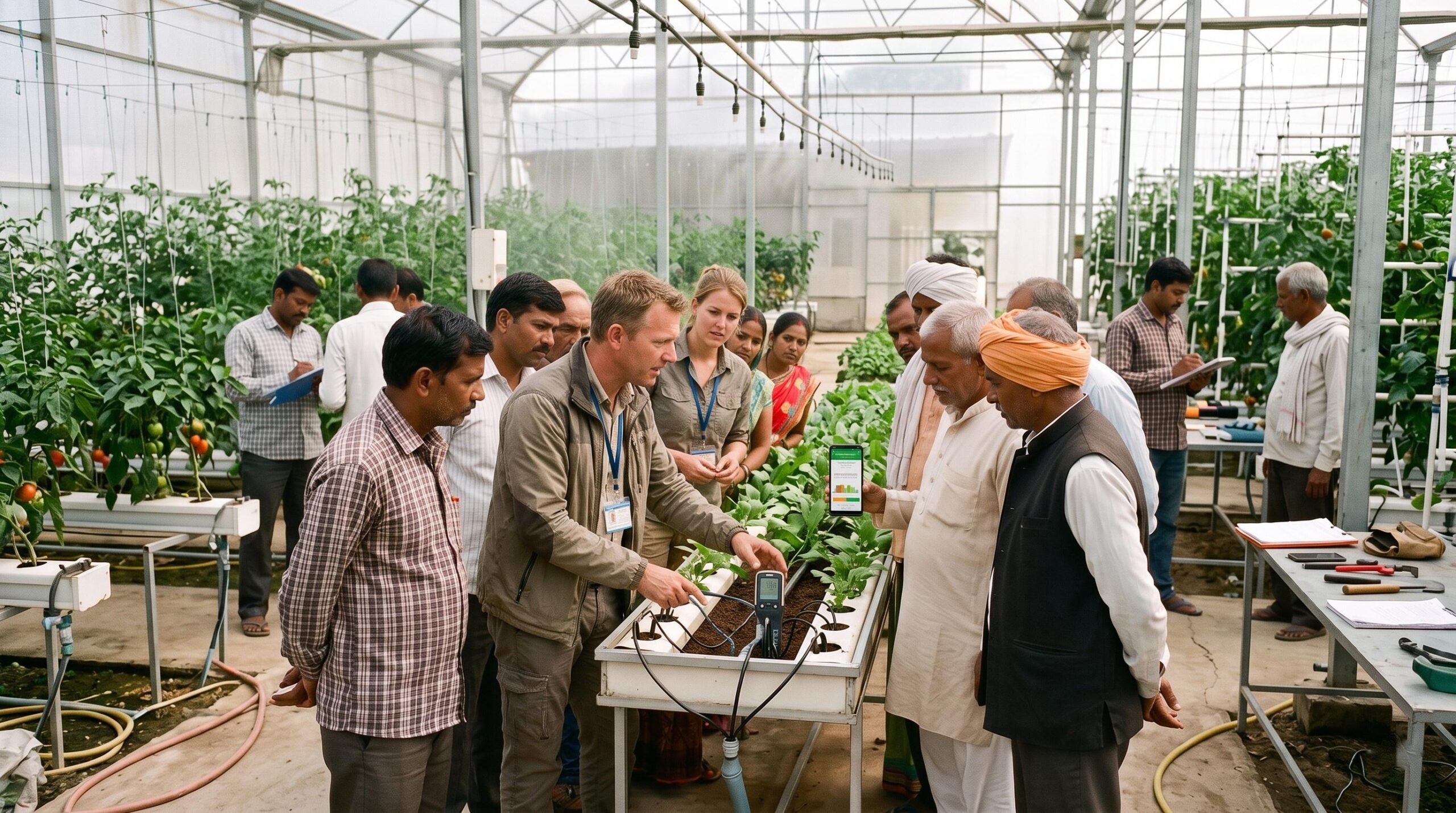
There’s a big gap in tech skills among traditional farmers. They need to know
how to use IoT sensors and manage hydroponic systems, which is a specialized
field.
To fix this, organizations like Krishi Vigyan Kendras and private agri-extensions
are creating training programs that are tailored to local needs. India’s
Department of Telecommunications reported that 95.15% of villages had
access to 3G/4G mobile connectivity by April 2024. This enables farmers to
receive advice on their mobile phones in their own languages, helping translate
complex data into simple, daily instructions for farming.
Source: Press Information Bureau (PIB), Ministry of Communications, Government of India:
https://www.pib.gov.in/PressReleasePage.aspx?PRID=2040566&lang=1®=3
This is a big help, as it breaks down complicated tech talk into something that’s
easy to follow.
India’s farming is now focused on using technology to become self-sufficient
and sustainable. When we talk about using Dutch farming innovations in India,
7
it’s not just about copying foreign ideas – it’s about taking the best global
practices and using them to solve our own problems and create a strong food
system that can withstand challenges.
This way, we can make sure our farms are productive and good for the
environment at the same time.
India is now focusing on making its farming industry more modern. The
government is putting a lot of money into a project called the Digital
Agriculture Mission. This project aims to create a list of all farmers and make
maps of villages, which will help get subsidies and loans to the right people.
They’re also spending money on things like storage and transportation, with a
big fund of ₹1 lakh crore to help. This fund is called the Agriculture
Infrastructure Fund, or AIF for short.
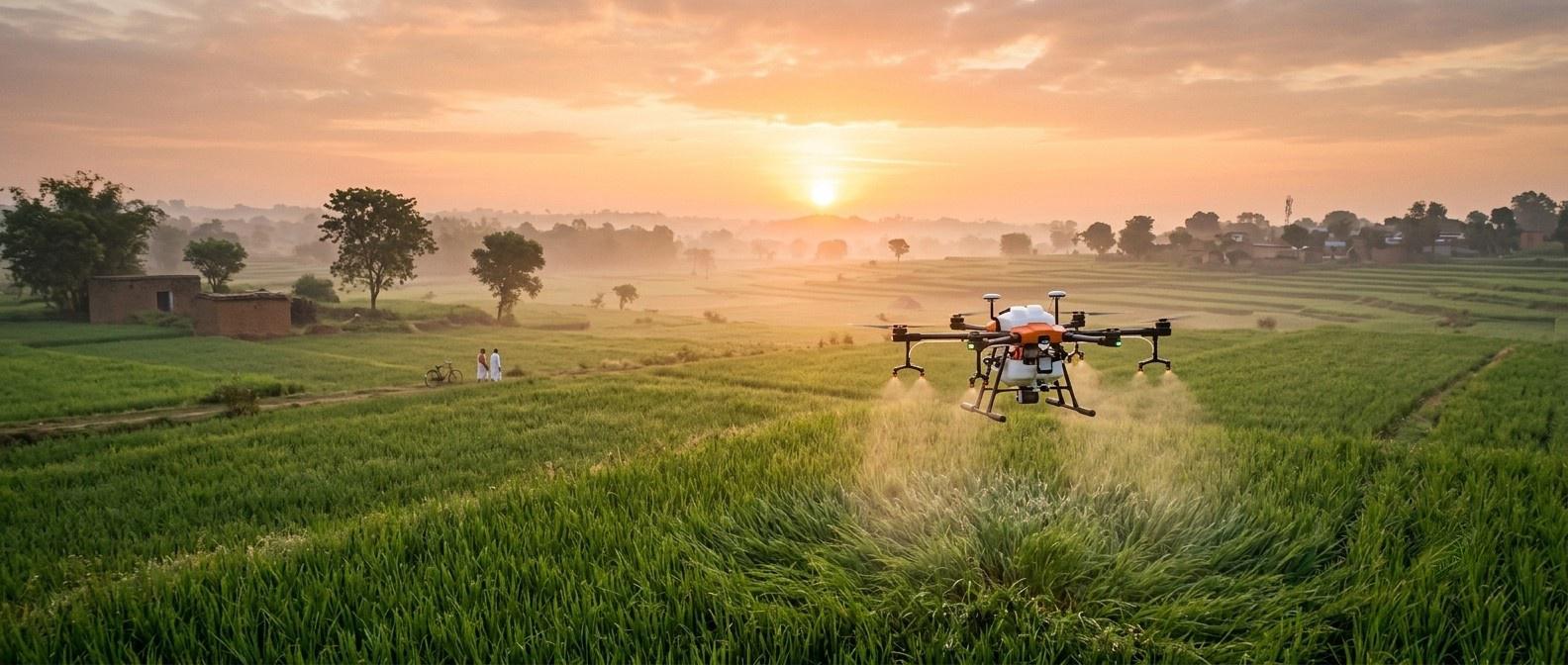
Another area of focus is the use of drones in agriculture, supported by the
Sub-Mission on Agricultural Mechanization (SMAM). Drones enable more
efficient crop spraying and monitoring of crop health, which can reduce costs
and labour for farmers. Taken together, these efforts are expected to improve
farmers’ incomes and livelihoods over the long term.
The use of these new technologies fits perfectly with the National Mission on
Natural Farming. Farmers can now use special machines to put just the right
amount of organic helpers and bio-stimulants where they’re needed, which
means they can have good harvests without hurting the soil or relying too
much on chemicals.
This approach allows India to increase food production while limiting
environmental impact, striking a balance between meeting present needs and
8
safeguarding natural resources. By adopting such practices, the country can
help ensure that its farms remain healthy and productive over the long term.
In May 2026, India and the Netherlands elevated their relationship to a
Strategic Partnership, with a roadmap covering 2026–2030 that includes
sustainable agriculture and food systems. The joint statement issued during
Prime Minister Modi’s visit to the Netherlands highlights continued
collaboration through the Joint Working Group on Agriculture, the growing
presence of Dutch companies in India in protected cultivation, food processing,
dairy, and poultry, and progress on Dutch-supported Centres of Excellence that
promote high-tech greenhouse production and training for smallholder farmers
while reducing water and agro-chemical use.
New initiatives include an Indo-Dutch Centre of Excellence for dairy training at
the Centre of Excellence for Animal Husbandry in Bengaluru, cooperation on
Clean Plant Centres to supply disease-free planting material for high-value
horticultural and fruit crops, and a Memorandum of Understanding between
the food safety authorities of both countries, the Netherlands Food and
Consumer Product Safety Authority (NVWA) and the Food Safety and
Standards Authority of India (FSSAI).
Source (this and the previous paragraph): Joint Statement by India and the Netherlands, 16 May 2026,
Government of the Netherlands:
https://www.government.nl/documents/2026/05/16/joint-statement-by-india-and-the-netherlands
India is creating a food system that’s ready for the future. By combining the
precision of Dutch farming with the large scale of Indian production, the
country is gearing up to feed its huge population of 1.4 billion people and
become a major player in exporting high-quality, sustainably grown food to the
world.
The future looks bright, thanks to ongoing innovation, strong government
support, and a firm commitment to changing the way agriculture works in
India. This is a big deal, as it will help the country feed its people and also sell
food to other countries, making it a leader in the global food market.
With new ideas and technologies being developed all the time, India is well on
its way to making its agriculture sector stronger and more sustainable
